
Community
How to choose a used van in Mallorca by comparing listings
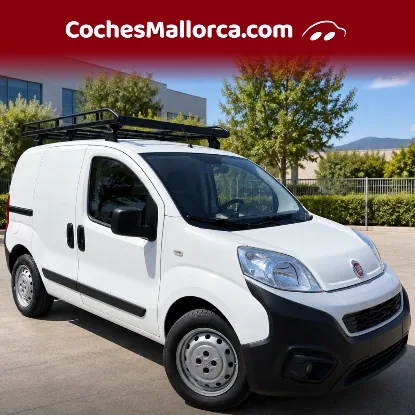
A used van is the right choice when you have already compared many similar listings and know what price, mileage and fuel type are normal for that model. The call to the seller should be used to confirm details, and for that it pays to come to it with your own benchmark, built from listings that show price, mileage and fuel type at a glance.
What a used van is and who it makes sense for
A second-hand van is a light commercial vehicle, designed to carry loads, tools or materials, that has already had at least one owner and comes back onto the market with its usage history in tow. It appeals above all to self-employed workers, small businesses and private buyers who need cargo space without paying the price of a new unit. It differs from a km 0 (nearly new) vehicle, which is registered but has barely been used, and from a passenger car, because in a van wear and tear almost always depends more on the work it has done than on how old it is. It is a very active market: in the first ten months of 2025, 303,491 used vans were sold in Spain, 4.8% more than in the same period the previous year, according to Ancove. With that volume there are almost always several comparable units available at the same time, so settling for the first one that appears is rarely justified. ➀
What a listing tells you before you call
On CochesMallorca, each vehicle's listing shows the year, fuel type and mileage, and has a button to share it. Those three details, read together, say a lot more than each one on its own.
Divide the kilometres by the years since registration and you will get the annual usage. A van with lots of kilometres and few years has probably done daily work or long journeys. One with few kilometres and quite a few years may have spent periods standing idle, which is also worth asking about, because a vehicle that has been off the road for a long time has its own pending checks.
The fuel type completes that picture. With a diesel, ask what kind of journeys it used to do: urban delivery work with constant stopping and starting punishes the mechanics differently from the open road, and that information does not appear on any listing.
Then there are the prices. Many vehicles show two prices: cash and financed. The gap between them is already information. If the financed price is lower, ask what term, interest and conditions come with it before taking it as the real price; if it is higher, that difference gives you a rough idea of what financing costs.
A single listing does not tell you whether the price is reasonable.
Several listings for the same model, with similar year and mileage, do. When you line them up, the price range in which almost all the offers sit becomes clear, and any listing that falls outside it, above or below, deserves a specific question before a visit.
The steps, from the filter to the in-person test
1. Define the job before the model: cargo volume, number of seats, type of journeys it will do and whether diesel, petrol or another powertrain suits you.
2. Open the used vehicles section and stick to the van category.
3. Gather all the units that fit your needs, even if they are from different brands; the list by brand helps you not to leave any out.
4. Note down from each listing the year, kilometres, fuel type and both prices when available, and calculate the annual mileage.
5. Sort the list by cash price and mark the units that fall outside the usual range.
6. Go back to the Latest additions section several times over a few days to spot newly published units before finalising your list.
7. Send the shortlisted listings with the share button to your mechanic or to whoever will drive the van, so they can give their opinion on specific details.
8. Call with closed questions: maintenance history, last MOT (ITV), previous use and, if you are going to finance, the exact conditions.
9. See the van in person and test it, ideally with some load, before committing to anything.
The criteria that separate a good purchase from a doubtful one
- Annual mileage. Calculate it with the year and kilometres on the listing and compare it with that of the other units on your list, not with an ideal figure.
- Fuel type versus your use. You can see it on the listing; what you need to judge is whether it fits the journeys you are going to make, not the ones the previous owner made.
- Comparable price. Always compare cash with cash. Some listings only show one price, with no financed price option, so in those cases confirm which it is before putting it on your list.
- Vehicle type. The portal's categories include van, trucks, off-road, motorhome, trailer, passenger car and licence-free. If your load exceeds what a van can take, or if you want to sleep in it, also check trucks or motorhomes.
- Who is selling. The catalogue is fed by advertisers and dealerships, and the directory of advertisers and dealerships lets you see who is behind each listing and what else they have published.
- Condition. Used and Km 0 are filtered separately; looking at both shows you how much it costs to skip the kilometres.
Mistakes that make the purchase more expensive without you noticing
Comparing a financed price with a cash price is the slip that most distorts the list. The unit that looks cheapest may only be so with financing you do not intend to take out. Before sorting anything, put all the listings in the same price column. If a listing shows only one figure, ask what type it is.
Trusting a low mileage without looking at the year leads to wrong conclusions. Few kilometres on a van that is many years old do not always mean good condition: they can indicate long periods without moving. Ask when the last service was done and what was replaced, and ask to see the maintenance records.
Negotiating without a benchmark leaves the conversation in the seller's hands. Whoever calls the first listing they like does not know whether the price is within the usual range or above it. With several listings compared, you can point to an equivalent unit and discuss the facts, which is a much shorter conversation.
Searching only in the van category leaves out valid options. Someone who transports heavy loads may find a better fit among trucks, and someone who wants a vehicle to travel and stay overnight in is usually, in reality, looking for a motorhome. Define the need and go through all the categories that cover it.
Ruling out km 0 on principle can also prove costly at times. When the difference from a used van that is only a few years old is small, it is worth checking the km 0 units before deciding, because that difference is exactly what you pay for the kilometres you will not have to cover yourself.
Used, km 0 or new depending on the work ahead of it
If your van is going to be a work tool with intensive use and a tight budget, a used unit with annual mileage within the normal range is the logical choice. You take on part of the wear already done in exchange for a lower price, and comparing listings protects you from units that fall outside what is reasonable.
If you need the van for many years and prefer to start without someone else's history, compare the price of the best used unit with that of an equivalent km 0. When the gap between them is small, the km 0 usually pays off; when it is wide, the used one leaves you room for maintenance or equipment. And if you are looking for a very specific configuration that does not appear among used vehicles, also check the new vehicles.
Our coverage focuses on Mallorca. That lets you go and see every van on your list without crossing the sea and test it before deciding. For questions about how to use the portal's filters, prices or listings, our frequently asked questions are close at hand.